Products
SEARCH WHAT YOU WANT
Why FIBC Bags Are Widely Used in Agriculture
Bulk bags are widely utilized in the agricultural sector, primarily due to their distinct advantages—including large capacity, durability, cost-effectiveness, and operational convenience—which perfectly align with the specific requirements of agricultural production, storage, and transportation.
1.High-Capacity, Efficient Storage
Typically capable of holding between 500 and 2,000 kilograms of material, bulk bags are ideal for the centralized storage of bulk agricultural supplies such as fertilizers, animal feed, grains, and seeds, thereby significantly reducing both packaging costs and storage space requirements.
2.Durable and Highly Adaptable
Constructed from materials such as polypropylene, these bags feature moisture-resistant, UV-resistant, and abrasion-resistant properties. This allows them to withstand common agricultural environments—including outdoor stacking and long-distance transport—while effectively preserving the quality of the stored materials.
3. Cost-Effective and Eco-Friendly
Compared to traditional woven sacks or metal drums, bulk bags offer a lower unit cost and are reusable (with certain models capable of being recycled for use 3 to 5 times). This reduces long-term packaging expenses and minimizes waste generation.
4. Convenient Handling and Transport
Designed with lifting loops or forklift sleeves, these bags facilitate rapid mechanical handling, thereby saving on labor costs. When folded, they occupy minimal space, resulting in low transportation costs for returning empty bags; this makes them highly suitable for material circulation across dispersed farmlands or processing facilities.
5. Ensuring Material Safety
Their sealed structure provides protection against dust and contamination, while select models can be customized with inner liners to prevent moisture ingress or oxidation, thereby ensuring that sensitive materials—such as fertilizers and animal feed—remain free from spoilage.
These characteristics establish bulk bags as an indispensable tool in modern, large-scale, and intensive agricultural operations, making them particularly well-suited for use by agricultural cooperatives, large-scale farms, and entities involved in the agricultural supply chain.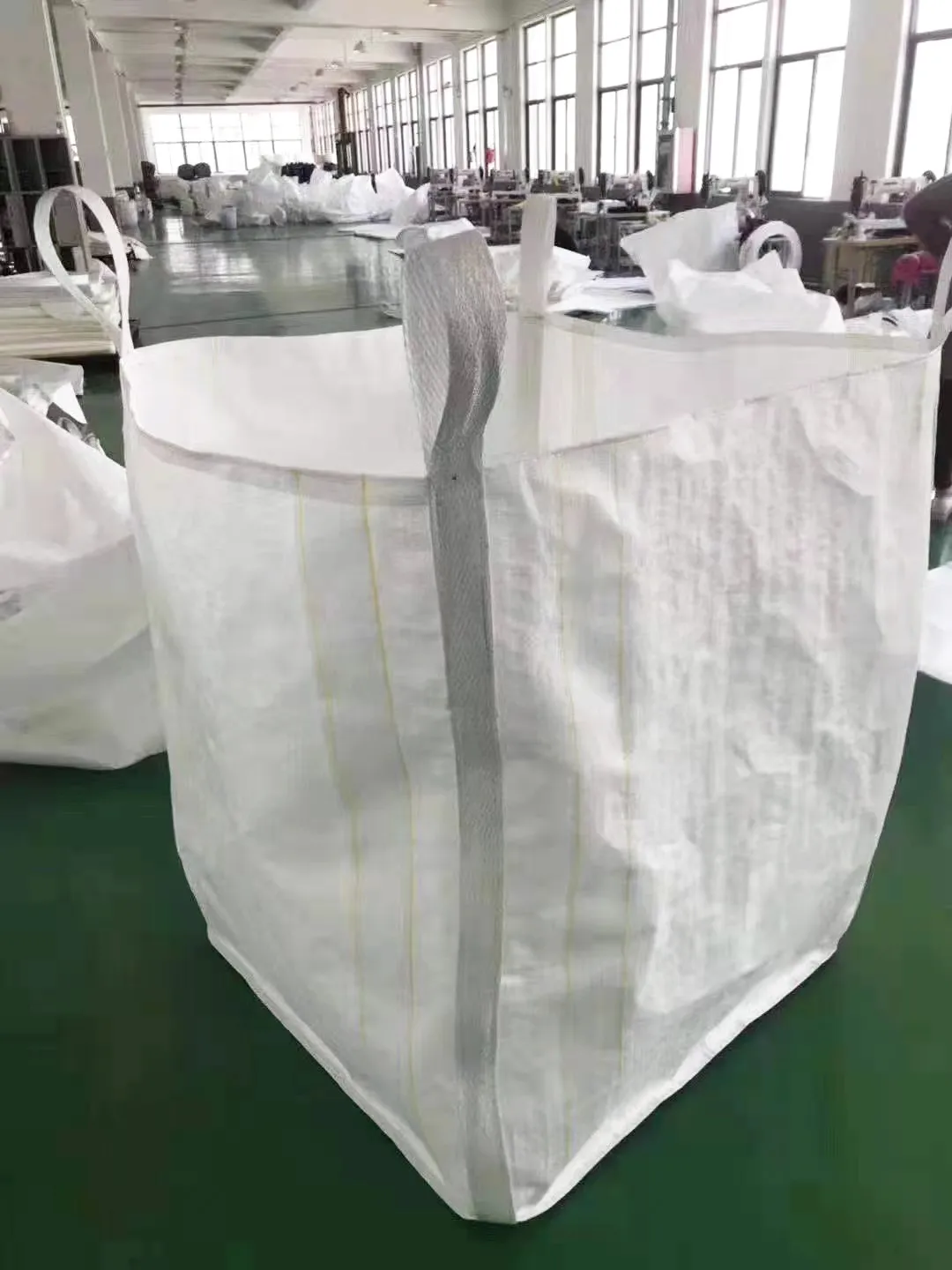
Why FIBC Bags Are Widely Used in Agriculture
Bulk bags are widely utilized in the agricultural sector, primarily due to their distinct advantages—including large capacity, durability, cost-effectiveness, and operational convenience—which perfectly align with the specific requirements of agricultural production, storage, and transportation.
1.High-Capacity, Efficient Storage
Typically capable of holding between 500 and 2,000 kilograms of material, bulk bags are ideal for the centralized storage of bulk agricultural supplies such as fertilizers, animal feed, grains, and seeds, thereby significantly reducing both packaging costs and storage space requirements.
2.Durable and Highly Adaptable
Constructed from materials such as polypropylene, these bags feature moisture-resistant, UV-resistant, and abrasion-resistant properties. This allows them to withstand common agricultural environments—including outdoor stacking and long-distance transport—while effectively preserving the quality of the stored materials.
3. Cost-Effective and Eco-Friendly
Compared to traditional woven sacks or metal drums, bulk bags offer a lower unit cost and are reusable (with certain models capable of being recycled for use 3 to 5 times). This reduces long-term packaging expenses and minimizes waste generation.
4. Convenient Handling and Transport
Designed with lifting loops or forklift sleeves, these bags facilitate rapid mechanical handling, thereby saving on labor costs. When folded, they occupy minimal space, resulting in low transportation costs for returning empty bags; this makes them highly suitable for material circulation across dispersed farmlands or processing facilities.
5. Ensuring Material Safety
Their sealed structure provides protection against dust and contamination, while select models can be customized with inner liners to prevent moisture ingress or oxidation, thereby ensuring that sensitive materials—such as fertilizers and animal feed—remain free from spoilage.
These characteristics establish bulk bags as an indispensable tool in modern, large-scale, and intensive agricultural operations, making them particularly well-suited for use by agricultural cooperatives, large-scale farms, and entities involved in the agricultural supply chain.